In 2026, the world of DRAM memory will undergo one of the biggest changes of the decade. Manufacturers are phasing out DDR4 production faster than anyone predicted, and the market is already feeling the consequences of this process. Prices are rising, availability is declining, and DDR4-based infrastructure is becoming increasingly difficult to maintain. Many companies are faced with the question not of “if” but “when” to switch to DDR5 so that their system memory does not become a bottleneck for further development. Now is the time to prepare for real changes in the technology lifecycle and understand what they mean for current and future IT projects.
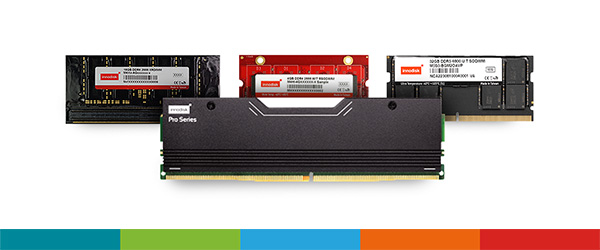
The largest DRAM manufacturers – Micron, Samsung, and SK Hynix – have officially begun the process of phasing out DDR4 memory from production. Final orders will only be fulfilled for the next few quarters, with the last shipments ending by the end of 2026. The market reacted immediately to these decisions, resulting in sharp price increases of up to 100%. Production lines are already being redirected to DDR5 and HBM memory, further limiting the availability of DDR4 and accelerating its transition to EOL status.
The production limitation is not a temporary change, but a consequence of the dynamic growth in demand for modern memory with higher bandwidth. DDR5 offers significantly higher performance, better energy efficiency, and greater capacity scalability, which is why DRAM manufacturers prefer to direct their resources where demand is growing. At the same time, smaller players – such as CXMT and Nanya – are unable to fill the gap left by global leaders, leading to increasingly apparent shortages and uncertainty in the supply of DDR4 memory.
The phase-out of DDR4 will most severely affect companies and institutions whose infrastructure is based on servers that use this memory as the only compatible standard. These are systems with 1st, 2nd, and 3rd generation Intel Xeon Scalable processors and 1st generation AMD EPYC processors, which dominate data centers, the public sector, education, and industry. This is also a challenge for users of professional workstations, where stable ECC memory is a critical component of their work.
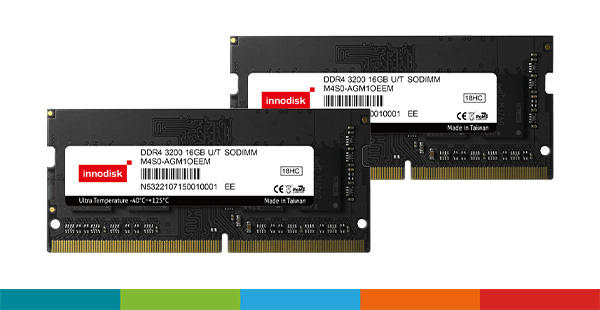
In the short term, securing service stocks is a sensible decision, as the availability of DDR4 memory will only decline. In the long term, however, maintaining infrastructure based on this technology will become increasingly difficult and expensive, and in many cases will require early modernization. The lack of compatible modules may lead to a situation where a simple memory failure in a server will force its premature replacement. Fortunately, Innodisk DDR4 modules are still available from JM elektronik, allowing you to secure your supplies in advance and calmly prepare for future changes in the memory market.
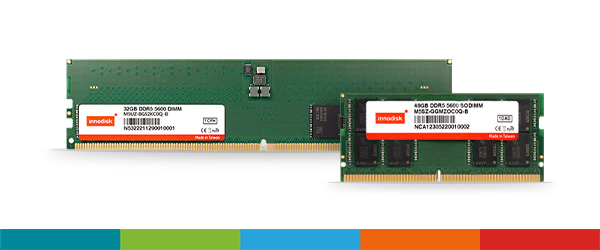
DDR5 memory offers a significant technological leap forward compared to DDR4. It provides higher bandwidth, lower power consumption, greater stability thanks to ODECC, and the ability to design very high-capacity modules, which is crucial in AI systems, data analytics, smart factories, and edge computing. In environments where reliability and long-term component availability are important, DDR5 is becoming not only a modern solution, but a necessary one.
Companies and institutions planning further infrastructure development are already creating migration strategies. This includes analyzing platform compatibility, planning equipment replacement, verifying supplier EOL dates, and gradually implementing DDR5-compatible computers and servers. At the same time, it is necessary to maintain minimum stocks of DDR4 memory to ensure continuity of operation during the transition period.
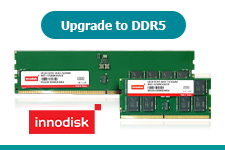
JM elektronik offers Innodisk industrial DDR5 memory modules designed for demanding edge, AI acceleration, embedded, and IPC applications. These solutions are designed for long life, high reliability, and full compatibility with next-generation industrial computers, allowing for a safe and gradual transition to the DDR5 standard.