Technological change is a constant feature of the world of IT and industrial electronics, but not every change in the field of operating memory requires an immediate response. There are times when it is worth pausing for a moment, looking at the direction of development of the RAM market, and consciously planning the next steps. This is precisely where the field of computer memory finds itself today. DDR5 memory is becoming increasingly common in everyday use, and DDR4 memory is gradually giving way to newer solutions, while remaining a solid foundation for many operating systems based on proven memory modules.
This is a good time to look at the upcoming change in RAM technology not as a necessity, but as a natural stage of evolution. On the one hand, there is a real need to prepare new designs for DDR5 memory and take advantage of its capabilities, and on the other hand, there is a sensible approach to maintaining and securing existing installations based on DDR4 and DDR3 memory. This balanced view of RAM allows for continuity of operation, design flexibility, and full cost control.
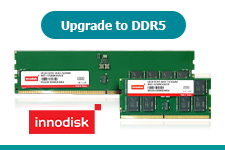
The computer and industrial equipment market is entering a new stage of development, in which DDR5 memory is no longer a novelty, but is becoming the new standard for RAM. Manufacturers of processors, chipsets, and motherboards are increasingly focusing on platforms that support modern DDR5 memory, and new hardware designs are being developed for this type of memory from the outset.
DDR4 memory will not disappear overnight, but its importance will gradually decline, as was previously the case with DDR3 memory. Now is the right time to assess the life cycle of your systems and the memory modules used in them.
DDR5 memory is not just about higher clock speeds specified in the technical specifications of RAM modules. It is primarily about higher memory bandwidth, better power management, and an operating memory architecture designed for modern multi-core processors.
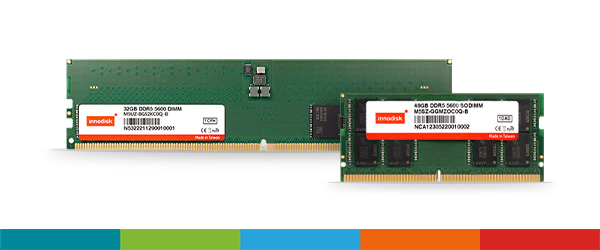
In practice, DDR5 memory translates into more stable system performance under heavy loads, greater RAM scalability, and a longer development perspective for the entire hardware platform. In projects planned for many years ahead, modern DDR5 memory becomes the natural choice.
Migration to the new RAM standard should not be impulsive. In many systems, DDR4 memory still provides fully sufficient performance, stability, and compatibility. Therefore, instead of rapidly replacing the entire RAM infrastructure, a more common approach is to gradually implement platforms using DDR5 memory where it actually brings benefits.
This approach allows you to spread the investment in new memory modules over time and safely prepare your IT environment for the next memory standard.
Industrial, embedded, and specialized solutions are designed for long-term operation and memory parameter stability. In their case, the availability of compatible RAM and the repeatability of memory modules are of key importance, not just maximum performance.
DDR4 memory, and in many installations also DDR3 memory, remain a proven and appropriate choice. However, this requires conscious planning for the continued availability of these types of RAM.
As the market shifts toward DDR5 memory, older RAM standards will gradually be phased out of production. For this reason, more and more companies are deciding to secure DDR4 or DDR3 memory in advance, treating it as part of their business continuity strategy.
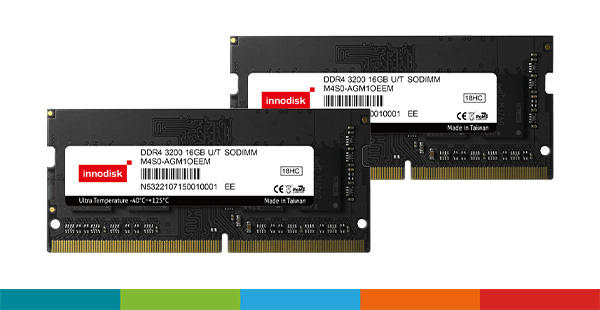
Purchasing RAM modules in advance allows you to avoid the risk of downtime, service issues, and the need for sudden hardware platform changes.
In the context of long-term projects, the choice of RAM manufacturer is crucial. Innodisk is an industrial memory manufacturer specializing in solutions such as DDR5, DDR4, and DDR3 memory, offering long product availability, version control, and stability of memory module parameters throughout their life cycle.
Innodisk memory is available from JM elektronik and includes a wide range of RAM modules for industrial and embedded applications.
At JM elektronik, we support our customers in selecting the right RAM at every stage of their project. We offer modern DDR5 memory for new platforms, while ensuring the availability of DDR4 and DDR3 memory for existing systems.
Thanks to our cooperation with memory manufacturer Innodisk, we can ensure continuity of memory module supplies, configuration consistency, and long-term support.
The most sensible approach is to think about the future and present of memory technology in parallel. DDR5 memory should be treated as the foundation for new projects, while DDR4 and DDR3 memory should be treated as a stable base for systems that still have many years of service ahead of them. This RAM management strategy allows for continuity of operation, cost control, and a smooth transition to the next generation of RAM.